 My Favorites
Share on your favorite
Or copy the link
Below are navigation links that will take you to the main text and navigation menus.
26,551 first names, 70,620 last names, 333,585 kanji variations.
one of the best Japanese name search tools for your baby!
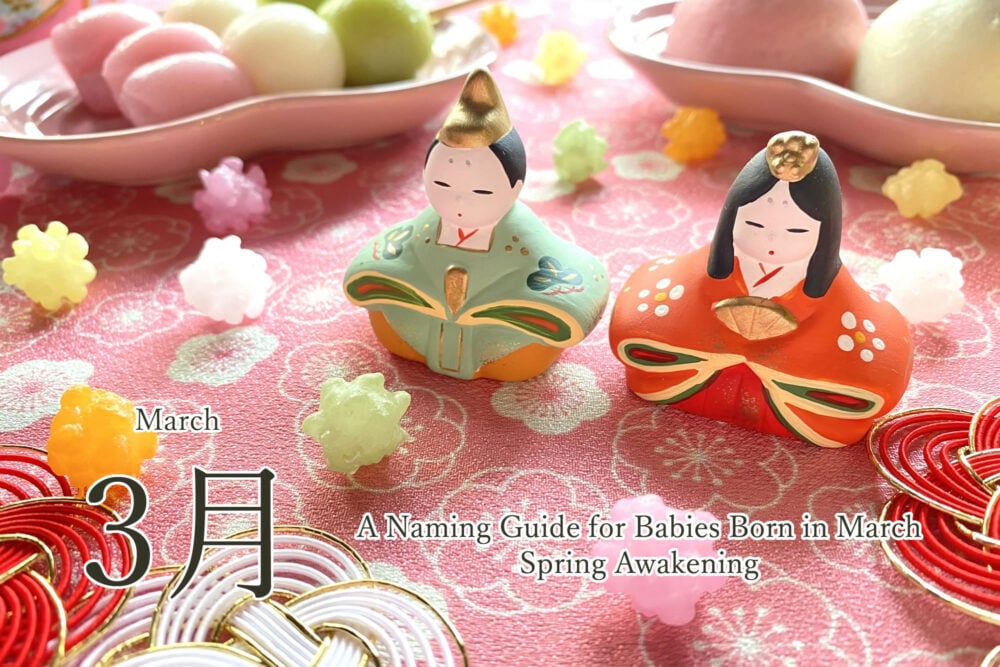
March is the month the Japanese call 弥生 (Yayoi) — a name that means “ever more life” or “increasing growth,” capturing the way the natural world surges back to vitality after winter’s long dormancy. This is the month when Japan truly awakens. Plum blossoms, which began opening in February, now share the stage with the first cherry blossoms (桜, sakura) unfurling in southern Japan. Hinamatsuri (雛祭り, Girls’ Day) on March 3 fills homes with ornamental dolls and peach blossoms. The Spring Equinox (春分の日, Shunbun no Hi) around March 20-21 brings perfect balance between day and night. And graduation ceremonies (卒業式) mark endings that open the door to new beginnings.
For parents naming a baby born in March, the month offers an extraordinary richness of imagery. March names can honor the ancient Hinamatsuri tradition with peach blossom and princess kanji, celebrate the explosive arrival of spring with budding and blooming characters, or mark the equinox’s moment of perfect balance. A March baby enters the world at the very heart of Japan’s spring awakening — a time when dormant branches burst into flower, the air softens with warmth, and everything that seemed still through winter reveals it was only gathering strength.
Contents
The classical Japanese name for March — 弥生 (Yayoi) — is one of the most beautiful month names in the traditional calendar. The character 弥 means “ever more” or “increasingly,” while 生 means “life” or “growth.” Together, they describe a month when plants and trees grow ever more vigorously (木草弥や生ひ月, kikusa iya oizuki) — a poetic observation of March’s explosive greening.
The name Yayoi holds special cultural weight because it also names an entire era of Japanese civilization — the Yayoi period (弥生時代, roughly 300 BC to 300 AD), when wet-rice agriculture transformed Japan. The era takes its name from the Tokyo neighborhood where its distinctive pottery was first discovered. For a baby, the name Yayoi carries echoes of both springtime abundance and cultural depth.
| Name | Kanji | Meaning |
|---|---|---|
Yayoi |
弥生 | “ever more” + “life” — the traditional March name, lush with vitality |
| Iyona |
弥奈 | “ever more” + “Nara/apple tree” — drawing on the 弥 of Yayoi, evoking abundant nature |
| Mio |
弥緒 | “ever more” + “thread/beginning” — an ever-growing beginning, full of possibility |
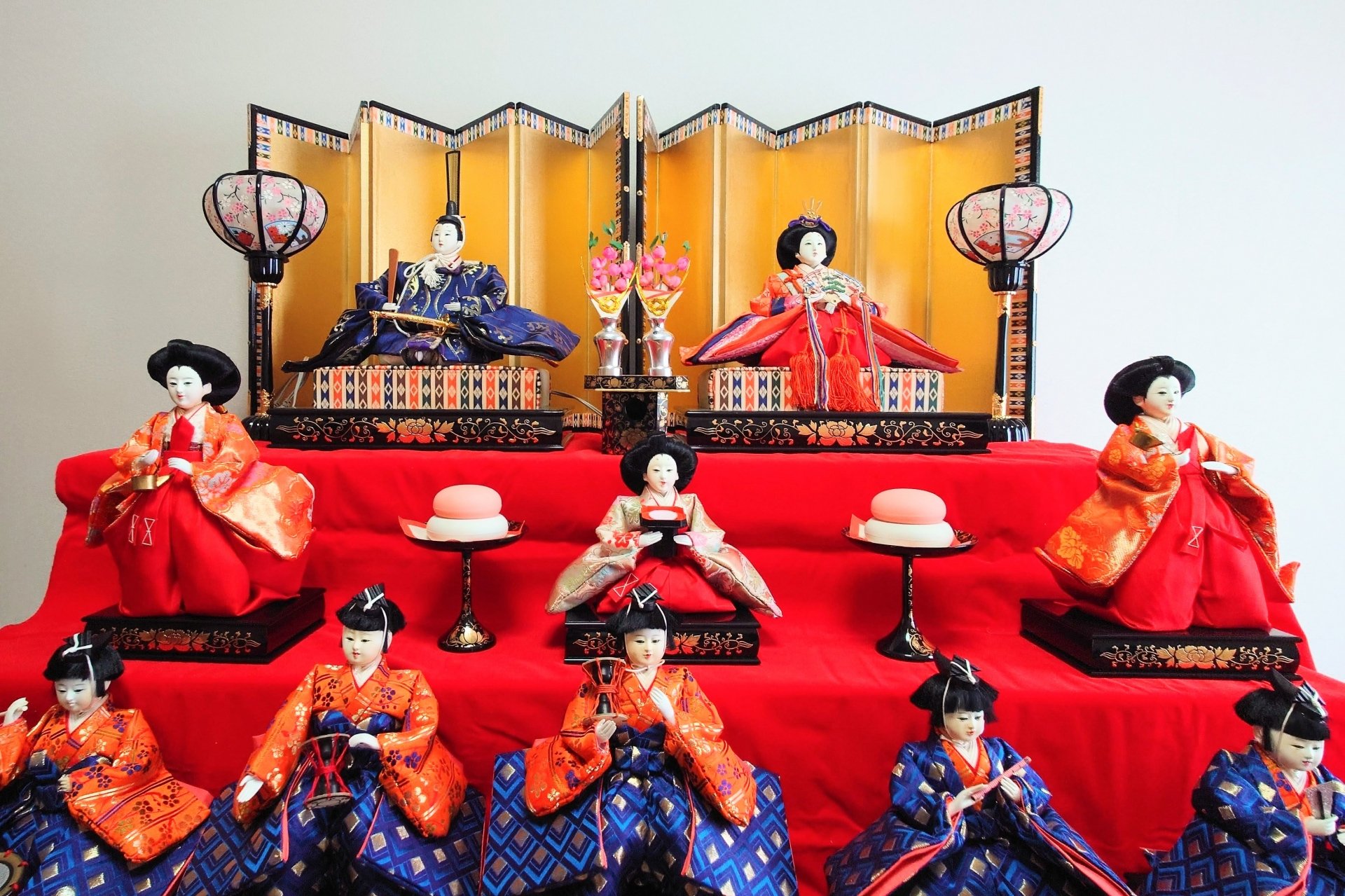
Hinamatsuri: a traditional seven-tier hina doll display with peach blossoms
The festival is also known as 桃の節句 (Momo no Sekku, the Peach Festival) because peach blossoms bloom around this time. In Japanese mythology, the peach has powerful protective qualities — the creator deity Izanagi used peaches to escape the underworld and drive away evil spirits. Peach blossoms at Hinamatsuri thus serve a dual purpose: beauty and spiritual protection.
| Kanji | Readings | Meaning | Hinamatsuri Connection |
|---|---|---|---|
| 桃 | momo, tou | peach, peach blossom | The festival flower. Peach wards off evil and brings vitality — a blessing for daughters. |
| 雛 | hina, hiyoko | chick, small and precious, doll | The festival’s name character — the ornamental dolls and also “something small and lovable.” |
| 姫 | hime | princess | The empress doll at the top of the display. Elegance, grace, and feminine strength. |
| 紅 | kurenai, kou, beni | crimson, deep red | The red cloth (緋毛氈) covering the doll display tiers — a protective, auspicious color. |
| 雅 | miyabi, ga | elegance, refinement | The courtly elegance represented by the imperial doll set — Heian-era grace and beauty. |
Names inspired by Hinamatsuri:
| Name | Kanji | Meaning |
|---|---|---|
| Momoka |
桃花 | “peach” + “flower” — the peach blossom of the festival, protective and beautiful |
| Momoko |
桃子 | “peach” + “child” — a classic name with deep mythological roots |
| Hina |
雛 | “young bird, doll” — directly from the festival, meaning something small and precious |
| Hinano |
雛乃 | “doll/chick” + possessive — a gentle, traditional name evoking the festival |
| Himeka |
姫花 | “princess” + “flower” — a princess among flowers, graceful and strong |
| Miyabi |
雅 | “elegance, refinement” — the courtly beauty of the Heian era |
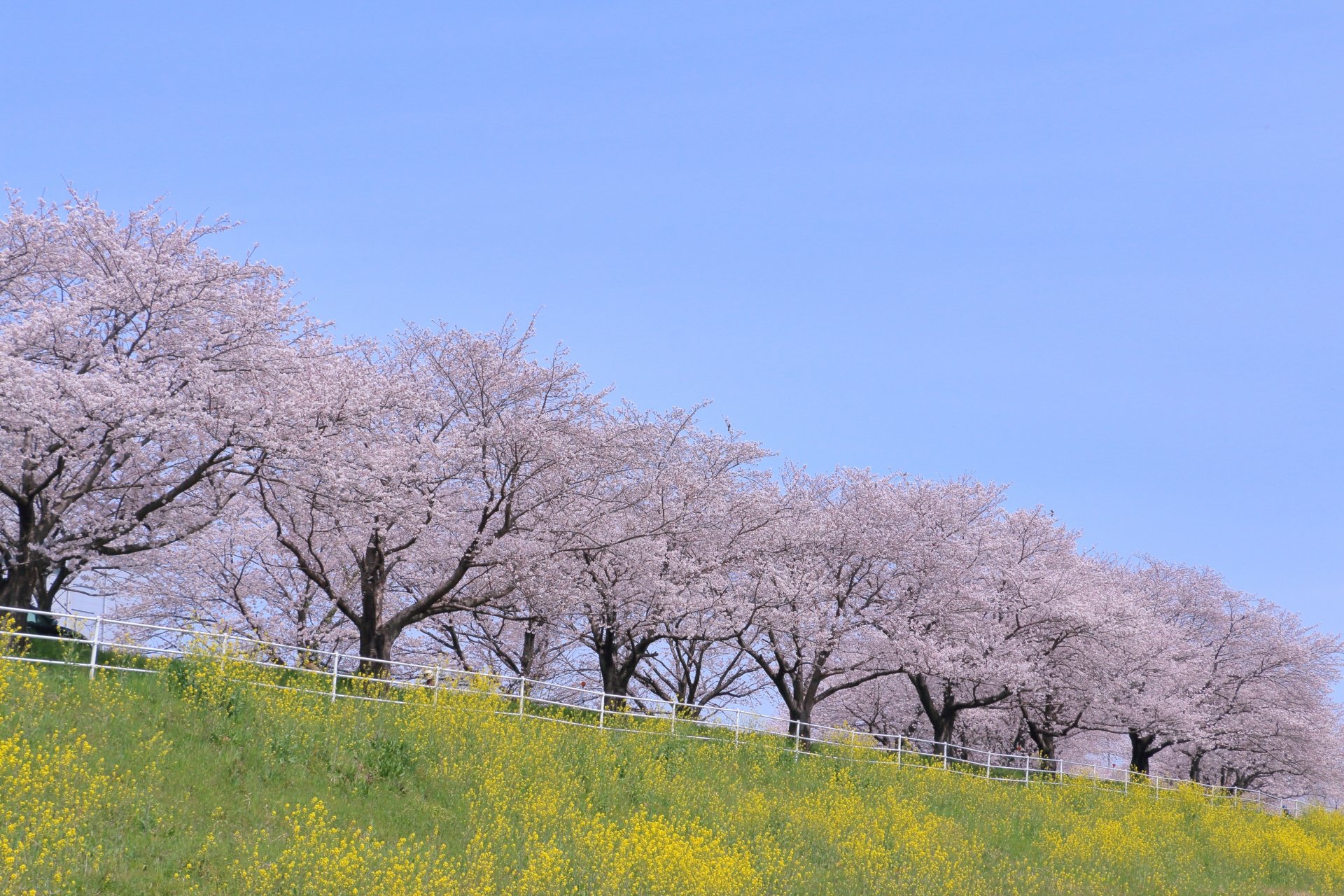
Sakura branches against a clear spring sky
March is the month when spring stops being an abstract promise and becomes a visible, tangible reality. Branches that were bare in February now carry blossoms. The air softens, birdsong returns, and the landscape shifts from muted grays and browns to a palette of greens, pinks, and yellows. The following kanji capture the energy of March’s spring awakening:
| Kanji | Readings | Meaning | March Connection |
|---|---|---|---|
| 桜 | sakura, ou | cherry blossom | Late March sees the first cherry blossoms opening in southern Japan — the beginning of hanami season. |
| 花 | hana, ka | flower, blossom | March brings an explosion of flowers — peach, plum, cherry, and wildflowers all blooming together. |
| 芽 | me, ga | sprout, bud | New buds are everywhere in March — on trees, in gardens, pushing through the warming soil. |
| 萌 | moe, hou | budding, sprouting | The greening of the landscape — 萌え出る (moeideru), to begin sprouting. March turns brown hills green. |
| 桃 | momo, tou | peach blossom | The flower of Hinamatsuri (March 3). Protective and beautiful, blooming in soft pink. |
| 春 | haru, shun | spring | March is spring in full force — the equinox confirms it, and the natural world agrees. |
| 菜 | na, sai | greens, vegetable, rapeseed | 菜の花 (nanohana, rapeseed flowers) blanket March fields in bright yellow — a beloved spring sight. |
| 陽 | you, hi | sun, sunlight, positive | The spring sun grows warmer daily. After the equinox, daylight exceeds darkness. |
March boy names can capture the month’s dynamic energy — the force of spring pushing through winter’s last resistance, the lengthening days, the first cherry blossoms. These names balance vitality with depth, drawing on March’s themes of growth, renewal, and bold new beginnings.
| Name | Kanji | Meaning | March Connection |
|---|---|---|---|
| Haruto |
春翔 | “spring” + “soar” | Soaring into spring with full energy. March is when spring truly takes flight across Japan. |
| Haruki |
春樹 | “spring” + “tree” | A tree in its spring glory — blooming, leafing, reaching for the warming sun. |
| Sakuto |
朔斗 | “first day/new moon” + “Big Dipper” | New beginnings under the guiding stars — March marks Japan’s graduation-to-entrance season. |
| Youta |
陽太 | “sun” + “thick, great” | Great sunlight — the spring sun growing stronger each day through March. |
| Soutarou |
颯太郎 | “refreshing wind” + “great” + “son” | A great son of the spring wind — the warm March breeze that carries cherry petals. |
| Yamato |
大和 | “great” + “harmony” | The Spring Equinox (春分) embodies cosmic harmony — equal day and night, perfect balance. |
| Kaito |
海斗 | “sea” + “Big Dipper” | The sea reflects March’s clearing skies. Aquamarine, March’s birthstone, means “sea water.” |
| Shouma | 翔真 | “soar” + “truth” | Soaring truthfully — the honest energy of spring’s arrival, unstoppable and authentic. |
| Gaito |
芽依斗 | “sprout” + “rely on” + “Big Dipper” | A dependable new sprout reaching toward the stars — March’s buds pushing skyward. |
| Shunsuke | 春介 | “spring” + “helper” | One who helps usher in spring — a person who brings warmth and new beginnings to others. |
| Hinata |
陽向 | “sun” + “direction/facing” | Facing the sun — turning toward the light and warmth that March brings in abundance. |
| Naoki |
直樹 | “honest, straight” + “tree” | A tree growing straight and true — the upright growth of March’s awakening forests. |
March girl names are among the most romantic in the Japanese naming tradition. The month offers peach blossom elegance from Hinamatsuri, the first cherry blossoms of the year, and the gentle warmth of spring settling over the landscape. These names capture March’s distinctive blend of delicacy and vitality.
| Name | Kanji | Meaning | March Connection |
|---|---|---|---|
| Sakura |
桜 | “cherry blossom” | The first cherry blossoms open in late March. Japan’s most iconic flower and a perennially beloved name. |
| Momoka |
桃花 | “peach” + “flower” | The peach blossom of Hinamatsuri — protective, beautiful, and full of vitality. |
| Hina |
陽菜 | “sun” + “greens” | Sunlit rapeseed flowers — the bright yellow 菜の花 that carpet March fields in sunshine. |
| Koharu |
心春 | “heart” + “spring” | Spring in the heart — the inner warmth and joy that March’s arrival brings. |
| Nanami |
菜々美 | “greens” + “greens” + “beauty” | The beauty of spring greens — nanohana fields stretching to the horizon. |
| Mei |
芽依 | “sprout” + “rely on” | A dependable sprout — new life emerging from the warming March earth. |
| Moe |
萌 | “budding, sprouting” | The very first greening of the hills. March is when 萌 becomes visible everywhere. |
| Hinano |
雛乃 | “doll/chick” + possessive | A Hinamatsuri name — gentle, traditional, and full of parental love. |
| Haruna |
春菜 | “spring” + “greens” | Spring greens — the fresh vegetables and flowers that March brings to tables and fields. |
| Yayoi |
弥生 | “ever more” + “life” | The traditional name for March itself — a name that means ever-increasing vitality. |
| Honoka |
穂乃花 | “grain ear” + possessive + “flower” | A flower among the grain — natural beauty and the promise of an abundant harvest. |
| Misaki |
美咲 | “beauty” + “bloom” | Beautiful blooming — March is the month when Japan’s most beautiful flowers begin to open. |
The Spring Equinox (春分の日, Shunbun no Hi), falling around March 20-21, is a national holiday in Japan and one of the month’s most significant cultural moments. On this day, daylight and darkness are perfectly balanced — a moment of cosmic equilibrium before the light begins to dominate.
The equinox also marks the center of 春彼岸 (Haru Higan), a week-long Buddhist observance during which families visit ancestral graves, clean tombstones, and offer flowers and 牡丹餅 (botamochi, sweet rice cakes covered in red bean paste, named after the peony). Higan means “the other shore” — the far bank of the river of suffering — and this period is a time for reflecting on the six Buddhist perfections (六波羅蜜): generosity, morality, patience, diligence, meditation, and wisdom.
The equinox’s themes of balance, reflection, and spiritual crossing inspire contemplative names:
| Kanji | Readings | Meaning | Equinox Connection |
|---|---|---|---|
| 均 | kin, hitoshi | equal, balanced, even | The equinox is the moment of perfect balance — equal day and night. |
| 和 | wa, kazu, nagomi | harmony, peace, Japan | The harmony of balanced seasons. Also central to Japanese identity and aesthetics. |
| 悟 | satoru, go | enlightenment, awareness | Higan’s Buddhist theme — the pursuit of spiritual awakening and understanding. |
| 光 | hikari, kou | light | After the equinox, light wins — each day brings more sunshine than the one before. |
Names inspired by the Spring Equinox and Higan:
| Name | Kanji | Meaning |
|---|---|---|
| Hitoshi |
均 | “equal, balanced” — the equinox’s perfect balance made personal |
| Satoru |
悟 | “enlightenment” — Buddhist awakening, deep understanding of truth |
| Kazuha |
和葉 | “harmony” + “leaf” — a leaf in harmony with the season, balanced and natural |
| Hikari |
光 | “light” — the spring light that begins to dominate after the equinox |
March is Japan’s graduation season (卒業式, sotsugyoushiki). From elementary schools to universities, students in formal attire receive their diplomas, sing farewell songs (the beloved 旅立ちの日に, “On the Day of Departure,” echoes through gymnasiums nationwide), and say goodbye to classmates and teachers. It is a bittersweet time — an ending that is also a doorway to something new.
This duality — the courage of leaving the familiar and the excitement of what comes next — inspires names that carry both weight and hope:
| Name | Kanji | Meaning |
|---|---|---|
| Tsubasa |
翼 | “wings” — wings to fly from what was toward what will be, the freedom of a new chapter |
| Tabito |
旅人 | “traveler” — setting out on life’s journey, brave and curious |
| Nozomi |
望 | “hope, aspiration” — the hopes that graduation carries forward into the future |
March’s birth flowers include the tulip (チューリップ) and the peach blossom (桃の花, momo no hana). In hanakotoba (花言葉), these flowers carry the following meanings:
Tulip (チューリップ):
The tulip arrived in Japan during the Edo period and has become one of the country’s most beloved spring flowers. Toyama Prefecture is Japan’s largest tulip producer, and the annual Tonami Tulip Fair draws hundreds of thousands of visitors each spring.
Color-specific tulip meanings add further depth:
Peach Blossom (桃の花):
Hanakotoba sources: hananokotoba.com, andplants.jp
Names inspired by March’s birth flowers:
| Name | Kanji | Meaning |
|---|---|---|
| Momona |
桃奈 | “peach” + “Nara/apple tree” — the peach blossom’s beauty and the richness of spring orchards |
| Momoe |
桃恵 | “peach” + “blessing” — the blessings of the peach blossom, protective and beautiful |
| Touma |
桃真 | “peach” + “truth” — the true spirit of the peach blossom season |
March’s birthstone is aquamarine (アクアマリン, akuamarin), a pale blue gemstone whose name comes from Latin aqua marina, meaning “sea water.” Aquamarine is associated with courage (勇敢), serenity (沈着), and 聡明 (intelligence). In the ancient world, sailors carried aquamarine as a talisman for safe voyages, believing it calmed storms and protected travelers on the sea. Medieval Europeans believed the stone could reawaken married love and bring victory in battle.
The aquamarine’s color — a translucent, gentle blue — connects to two important elements in Japanese aesthetics: water (水, mizu) and the sky (空, sora). The pale blue of early spring skies clearing after winter’s gray is one of March’s most beautiful sights. In Japanese color terminology, this shade is close to 水色 (mizuiro, “water color”) — a light, airy blue that evokes freshness, youth, and the transparency of spring streams.
| Kanji | Readings | Meaning | Aquamarine Connection |
|---|---|---|---|
| 海 | umi, kai | sea, ocean | Aquamarine means “sea water.” The ocean’s depth and vastness in a single character. |
| 水 | mizu, sui | water | The clear, flowing quality of aquamarine — pure water catching the spring light. |
| 碧 | ao, midori, heki | blue-green, azure | The exact color of aquamarine — a blue that merges with green, like sea and sky meeting. |
| 澄 | sumi, chou | clear, pure, limpid | The crystalline clarity of aquamarine — transparent, honest, without impurity. |
Names inspired by the aquamarine:
| Name | Kanji | Meaning |
|---|---|---|
| Kaito |
海斗 | “sea” + “Big Dipper” — the vast ocean under the guiding stars, courage and direction |
| Minato |
湊 | “harbor” — where sea meets land, a gathering place of strength and safety |
| Aoi |
碧 | “azure, blue-green” — the luminous color of aquamarine and spring seas |
| Sumire |
澄玲 | “clear” + “beautiful sound” — the crystal clarity of aquamarine expressed in sound |
| Mizuki |
瑞希 | “auspicious” + “hope” — fresh and hopeful, like spring water flowing toward the future |
March is called 弥生 (Yayoi) in the traditional Japanese calendar. The name combines 弥 (“ever more, increasingly”) with 生 (“life, growth”), describing a month when plants and trees grow with increasing vigor. Yayoi is also the name of a major period in Japanese history (the Yayoi period, roughly 300 BC to 300 AD). As a given name, Yayoi is used almost exclusively for girls and carries connotations of vitality, abundance, and the lush energy of spring’s arrival.
Hinamatsuri (雛祭り, Girls’ Day) on March 3 is one of Japan’s most important cultural festivals for naming inspiration. Key kanji include 桃 (momo, peach blossom — the festival is also called 桃の節句, the Peach Festival), 雛 (hina, doll/chick), and 姫 (hime, princess). Names like Momoka (桃花), Hina (陽菜), and Hinano (雛乃) directly connect to the festival. Even parents of boys can draw on March 3’s themes — the peach’s protective mythology and the courtly elegance of the doll display offer rich material for any child’s name.
The most characteristic March kanji include 桜 (sakura, cherry blossom), 桃 (momo, peach), 花 (hana, flower), 春 (haru, spring), 芽 (me, sprout), 萌 (moe, budding), 菜 (na, greens/rapeseed), and 陽 (you, sun). These span the month’s major themes: Hinamatsuri’s peach blossoms, the first cherry blossoms of the year, spring greenery, and the strengthening March sun. The kanji 弥 (iya/mi, “ever more”) from the month’s traditional name Yayoi also appears in girl names.
Absolutely. A name like Momoka (桃花, “peach blossom”) honors Hinamatsuri, while 和 (wa, “harmony”) or 均 (hitoshi, “balance”) kanji can reference the equinox’s perfect balance of day and night. Some parents combine both themes — for example, using a Hinamatsuri-inspired given name with a middle or sibling name that references the equinox. March’s richness of cultural events means parents have an unusual wealth of naming themes to draw from within a single month.
Both months claim cherry blossoms. In southern Japan (Kyushu, Shikoku, and southern Honshu), cherry blossoms typically begin opening in late March, while Tokyo and central Japan see peak bloom in early to mid-April. Northern Japan may not see cherry blossoms until May. A March baby named Sakura (桜) connects to the exciting moment of first bloom — the anticipation and wonder of the first petals opening. An April baby with the same name connects to full bloom and hanami season. Both are perfectly appropriate.
 Share
Share Share on your favorite






Or copy the link
Sort by: Most Relevant
Sorts names by how closely they match your search meaning. Names containing more kanji that match your search terms appear higher in the results.
Sort by: Most Kanji Variations
Sorts names by how many different kanji spellings they have. In general, names with more variants tend to be more familiar and widespread in Japan (with some exceptions).
Sort by: Most Viewed
Sorts names by page views on this site. Views reflect global traffic (including Japan), so this does not represent popularity among Japanese people only. A high view count does not necessarily mean the name is famous in Japan.
What is Hiragana?
Hiragana is one of the two Japanese syllabaries. Each character represents a sound (mora), not a meaning. It is used for native words, grammatical particles, verb/adjective endings (okurigana), and to show pronunciation above kanji (furigana). It developed from cursive forms of kanji.
What is Katakana?
Katakana is one of the two Japanese syllabaries. Each character represents a sound (mora), not a meaning. It is mainly used to write foreign words and names, loanwords, onomatopoeia, and for emphasis.
What is a Kanji Idea?
Kanji are Chinese characters used in Japanese writing. Unlike katakana and hiragana, each kanji character carries its own meaning.
When we convert your name into kanji, we select characters whose sounds match the Japanese pronunciation of your name, while also considering the meaning of each character. The result is a unique combination of kanji that both sounds like your name and carries meaningful symbolism.
We refresh the kanji combination each time you visit, so you can discover different options. If you find one you like, save it to your favorites!
What are English Syllables?
A syllable is a unit of pronunciation in English — it’s the beat you hear when you say a word.
Here are a few quick examples:
cat = 1 syllable
ba-by = 2 syllables
beau-ti-ful = 3 syllables
On this site, English Syllables show how a name naturally breaks into sounds when spoken in English. This helps you understand how English speakers naturally say the name and where they pause between sounds.
What are Japanese Morae?
A mora (plural: morae, Japanese: 拍 Haku) is the basic unit of sound in Japanese — think of it as one rhythmic “beat” when speaking.
Here are a few quick examples:
あ (a) = 1 mora
あい (a-i) = 2 morae
きょう (kyo-u) = 2 morae
On this site, Japanese Morae show how many “beats” a name has in Japanese. Most Japanese names have about 2–4 morae, which affects how natural and rhythmic the name sounds to native speakers.
This helps you see how the name fits into the natural rhythm of Japanese speech.
What is English Transcription?
“English transcription” (romanization) is the romanized form of a Japanese name, intended to reproduce its pronunciation as closely as possible. It is also useful for searching names on this site.
Japanese-Style Nicknames
In Japan, nicknames are used to express familiarity and affection. Typical features include:
Shortened forms: Names are often shortened for closeness, e.g., “Yuki” from “Yukiko” or “Taka” from “Takashi”.
Suffixes: Terms like “-chan” (often for girls, also for young children) and “-kun” (often for boys) are used among family and close friends. Among very close adults, “-chan” may still be used. More details
Use & context: Nicknames are informal—common among friends, family, or close colleagues—and are not suitable for formal or professional settings. Their use implies a certain degree of intimacy.
Long vowels: The long vowel mark “chōonpu” (ー) extends the preceding vowel. For example, “あーちゃん” (A-chan) lengthens the “あ” sound.
Households
Sorts surnames by the estimated number of Japanese households that use them. More households generally indicates a more common or well-known surname.
About our last-name data

Success
Migration completed successfully!