 My Favorites
Share on your favorite
Or copy the link
Below are navigation links that will take you to the main text and navigation menus.
26,551 first names, 70,620 last names, 333,585 kanji variations.
one of the best Japanese name search tools for your baby!

Contents
Shiki is a horror story written by Fuyumi Ono. It is about the risen (Okiagari 起き上がり) which are dead beings that come to life and feed on human blood. The humans who were killed by the Shiki have a chance of coming back to life being one of them. The disaster starts when a strange family moves into Sotoba, a small Japanese village. Unlike the other villagers, they lived in a western-style house with a butler and an in-house doctor. Since then the villagers started dropping dead one by one and there were people who claimed to see those who were supposed to be in their graves. Natsuno, the main character, decides to investigate the mystery of the risen after his best friend’s death.

Image by: Shiki Comic 1 (c)Fuyumi Ono・Ryu Fujisaki/Shueisha Inc
The Japanese title of Corpse Demon is Shiki(屍鬼). Together the kanji’s read ‘Shiki’ (屍鬼) but the individual kanji’s have separate meanings. ‘屍’ (Shi) means corpse and ‘鬼’(ki) means demon. Shiki is without doubt the best title for this manga since it is about corpses who rise from their graves to drink blood.

Image by: Shiki Official Website (c)Fuyumi Ono・Ryu Fujisaki/Shueisha Inc・Shiki production committee
Corpse Demon is the direct translation of the Japanese title Shiki. Depending on the kanji’s, the word ‘Shiki’ has several meanings. So to avoid confusion, the English title is the translation and not just the term ‘Shiki’. A few examples of different meanings of ‘Shiki’ are:
Shiki ‘四季’ = Four seasons
Shiki ‘指揮’ = Command
Shiki ‘式’ = Ceremony
In Japanese culture, names have significant meanings that are supposed to represent you as a person. Names can be expressed in hiragana, katakana, and kanji. Let’s find out the meanings of some names of characters in Shiki.

Image by: Shiki Official Website (c)Fuyumi Ono・Ryu Fujisaki/Shueisha Inc・Shiki production committe
Let’s start with the main character Natsuno Yuuki. His name was given by his father but he didn’t like it because it sounded like a girl’s name. ‘Natsu’(夏) means summer and ‘No’(野) means field. ‘Yuu’ (結) means to tie and ‘Ki’ (城) means castle.
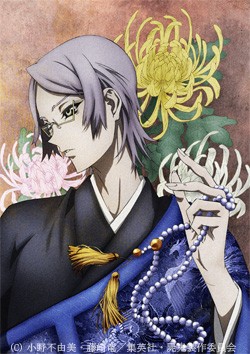
Image by: Shiki Official Website (c)Fuyumi Ono・Ryu Fujisaki/Shueisha Inc・Shiki production committe
Now let’s look into Seishin Muroi. Seishin is the village priest as well as an author. He wrote a novel about the Shiki, later learning that his story was true and that Shiki did indeed exist. ‘Sei’(静) means quiet and ‘Shin’(信) means belief. On the other hand, ‘Muro’(室) means room, and ‘I’(井) means a well.
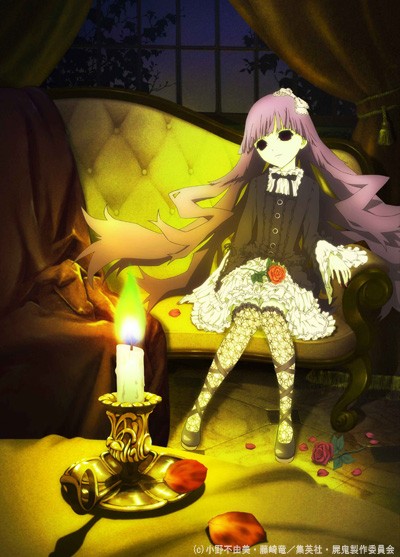
Image by: Shiki Official Website (c)Fuyumi Ono・Ryu Fujisaki/Shueisha Inc・Shiki production committe
Last but not least the daughter of the mysterious family, Sunako Kirishiki. Sunako is the main antagonist of this manga and the mastermind behind the whole problem. ‘Suna’ (沙) means sand and ‘Ko’ (子) is a common kanji that is put at the end of girls’ names. ‘Kiri’ (桐) is a type of tree used to make furniture and ‘Shiki’(敷) means to place. FYI, ‘Shiki’ in Sunako’s last name is not the same as the title of this manga!
Here are some useful phrases from Shiki which will help you along with your Japanese studies!
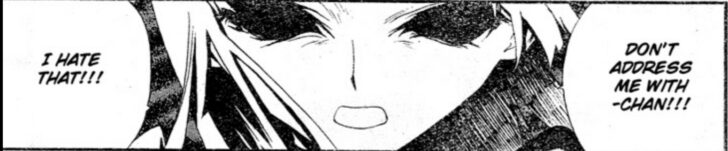
Image by: Book 1 Ep 1, Yuuki Natsuno part 2 (c)Fuyumi Ono・Ryu Fujisaki/Shueisha Inc
When you call a little girl, you put ‘chan’ after their names to sound friendly. ‘Tsukeru’ (付ける) means put. Unlike her appearance, Sunako is actually a long-living Shiki so treating her like a little girl often made her mad. ‘kirai’ means dislike, add a ‘dai’(大 means big) to make it stronger.
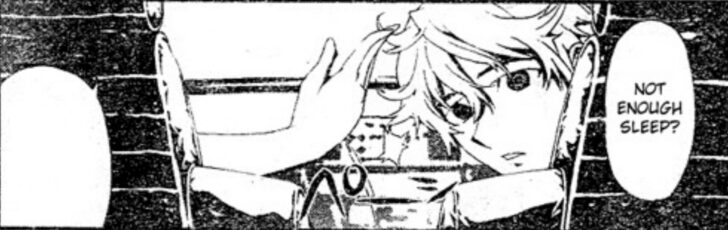
Image by: Book 1, Yuuki Natsuno part 2 (c)Fuyumi Ono・Ryu Fujisaki/Shueisha Inc
‘Ne’(寝) means sleep, ‘Busoku’, or ‘Fusoku’(不足) means lack of. You can add ‘Busoku’ to other words. For example:
‘運動不足’ (Undō Busoku) = lack of exercise
‘食糧不足’ (Shokuryō Busoku) = Food shortage
Many people in the Sotoba village died because they lacked blood.
‘血液不足’(Ketsueki Busoku)= lack of blood
 Share
Share Share on your favorite






Or copy the link
Sort by: Most Relevant
Sorts names by how closely they match your search meaning. Names containing more kanji that match your search terms appear higher in the results.
Sort by: Most Kanji Variations
Sorts names by how many different kanji spellings they have. In general, names with more variants tend to be more familiar and widespread in Japan (with some exceptions).
Sort by: Most Viewed
Sorts names by page views on this site. Views reflect global traffic (including Japan), so this does not represent popularity among Japanese people only. A high view count does not necessarily mean the name is famous in Japan.
What is Hiragana?
Hiragana is one of the two Japanese syllabaries. Each character represents a sound (mora), not a meaning. It is used for native words, grammatical particles, verb/adjective endings (okurigana), and to show pronunciation above kanji (furigana). It developed from cursive forms of kanji.
What is Katakana?
Katakana is one of the two Japanese syllabaries. Each character represents a sound (mora), not a meaning. It is mainly used to write foreign words and names, loanwords, onomatopoeia, and for emphasis.
What is a Kanji Idea?
Kanji are Chinese characters used in Japanese writing. Unlike katakana and hiragana, each kanji character carries its own meaning.
When we convert your name into kanji, we select characters whose sounds match the Japanese pronunciation of your name, while also considering the meaning of each character. The result is a unique combination of kanji that both sounds like your name and carries meaningful symbolism.
We refresh the kanji combination each time you visit, so you can discover different options. If you find one you like, save it to your favorites!
What are English Syllables?
A syllable is a unit of pronunciation in English — it’s the beat you hear when you say a word.
Here are a few quick examples:
cat = 1 syllable
ba-by = 2 syllables
beau-ti-ful = 3 syllables
On this site, English Syllables show how a name naturally breaks into sounds when spoken in English. This helps you understand how English speakers naturally say the name and where they pause between sounds.
What are Japanese Morae?
A mora (plural: morae, Japanese: 拍 Haku) is the basic unit of sound in Japanese — think of it as one rhythmic “beat” when speaking.
Here are a few quick examples:
あ (a) = 1 mora
あい (a-i) = 2 morae
きょう (kyo-u) = 2 morae
On this site, Japanese Morae show how many “beats” a name has in Japanese. Most Japanese names have about 2–4 morae, which affects how natural and rhythmic the name sounds to native speakers.
This helps you see how the name fits into the natural rhythm of Japanese speech.
What is English Transcription?
“English transcription” (romanization) is the romanized form of a Japanese name, intended to reproduce its pronunciation as closely as possible. It is also useful for searching names on this site.
Japanese-Style Nicknames
In Japan, nicknames are used to express familiarity and affection. Typical features include:
Shortened forms: Names are often shortened for closeness, e.g., “Yuki” from “Yukiko” or “Taka” from “Takashi”.
Suffixes: Terms like “-chan” (often for girls, also for young children) and “-kun” (often for boys) are used among family and close friends. Among very close adults, “-chan” may still be used. More details
Use & context: Nicknames are informal—common among friends, family, or close colleagues—and are not suitable for formal or professional settings. Their use implies a certain degree of intimacy.
Long vowels: The long vowel mark “chōonpu” (ー) extends the preceding vowel. For example, “あーちゃん” (A-chan) lengthens the “あ” sound.
Households
Sorts surnames by the estimated number of Japanese households that use them. More households generally indicates a more common or well-known surname.
About our last-name data

Success
Migration completed successfully!