 My Favorites
Share on your favorite
Or copy the link
Below are navigation links that will take you to the main text and navigation menus.
26,551 first names, 70,620 last names, 333,585 kanji variations.
one of the best Japanese name search tools for your baby!
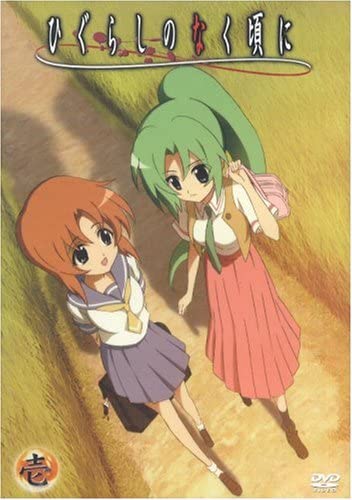
Image by: When They Cry DVD Vol.1 ©Ryukishi 07 ©When they cry production committee
Contents
When They Cry, the anime adaptation of a game. This great mystery story is created by Ryukishi07. Hinamizawa is a small village believed to be cursed by the mysterious ‘Oyashiro Sama’, in Japanese ‘Oyashiro Sama no Tatari’(オヤシロさまの祟り.) Every year on the night of the Cotton Drifting Festival (Watanagashi 綿流し) in June, one person dies and another goes missing. Rika, the daughter of the Furude shrine, was fated to die after the festival. However, with the help of her ancestor’s spirit, she gets to go back in time to find another way to survive. Despite the countless attempts Rika always ends up murdered and would never get past the month of June. Could there possibly be a way for Rika to escape her fate?
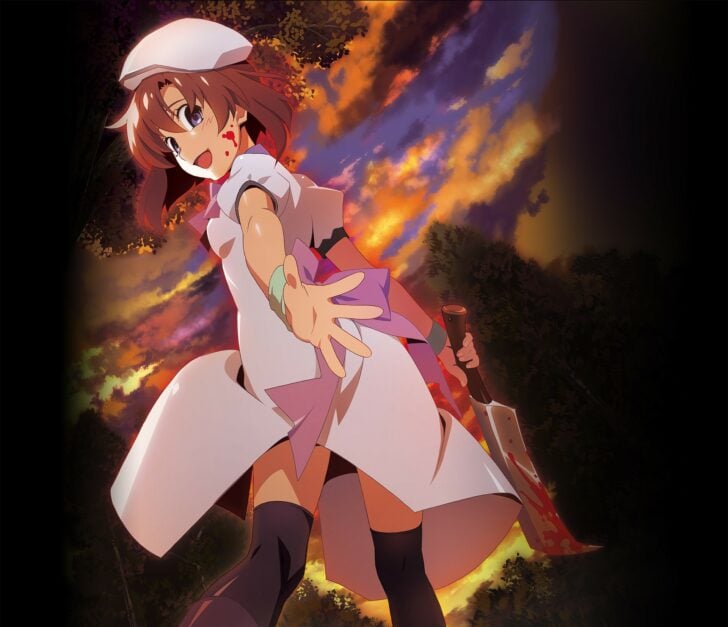
Image by: When They Cry Official website ©Ryukishi 07 ©When they cry production committee
The Japanese title is ‘Higurashi no Naku Koro Ni’ (ひぐらしのなく頃に) which means ‘When the evening cicadas cry’. As you can see the English title ‘ When They Cry’ is not the exact translation but the simplified version of it. ‘ひぐらし’(Higurashi) means ‘Evening Cicadas’, ‘の’(No) means ‘The’, ‘なく’(Naku) means ‘Cry’, ‘Koro’(頃) means ‘When’ and ‘に’(Ni) can be used to indicate a certain point in time.
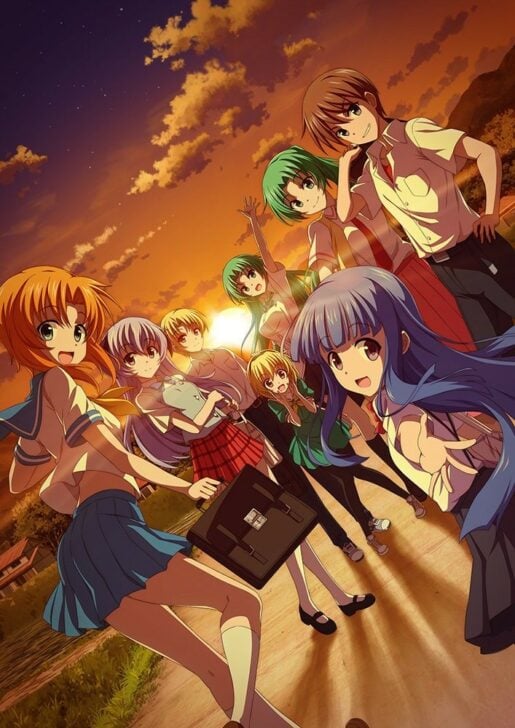
Image by: When They Cry Official Twitter ©Ryukishi 07 ©When they cry production committee
‘When They Cry’ is the simplified version of the translation which is ‘When the Evening Cicadas Cry’. However, another name that this series goes by which is ‘Higurashi When They Cry’ is the translation rephrased. The title refers to the cicadas that cry in Hinamizawa. Cicadas are very common bugs so you will hear them a lot in the countryside.
Image by: When They Cry DVD Vol.1 ©Ryukishi 07 ©When they cry production committee
In Japanese culture, names have significant meanings that are supposed to represent you as a person. Names can be expressed in hiragana, katakana, and kanji. Let’s find out the meanings of some names of characters in ‘When They Cry’.

Image by: When They Cry Ep 5 ©Ryukishi 07 ©When they cry production committee
First, let’s start with one of the main characters Rika Furude(梨花 古手.) Rika is trapped in an endless time loop, therefore she has the body of a child but is an adult inside. ‘Ri’(梨) means pear, ‘Ka’(花) means flower, ‘Furu’(古) means old and ‘De’(手) which can also be read as ‘Te’ means hand.
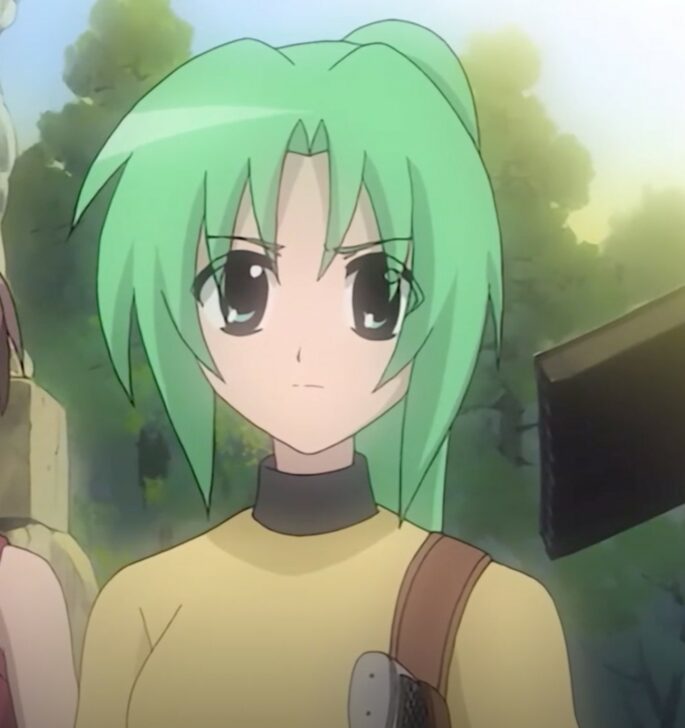
Image by: When They Cry Ep 6 ©Ryukishi 07 ©When they cry production committee
Next, let’s look into Mion Sonozaki(魅音 園崎.) Mion is the more well known and privileged sister of the Sonozaki twins. Mion is older, acts more mature, and is a tomboy. ‘Mi’(魅) means demon, ‘On’(音) means sound, ‘Sono’(園) means garden and ‘Zaki’(崎) means cape.
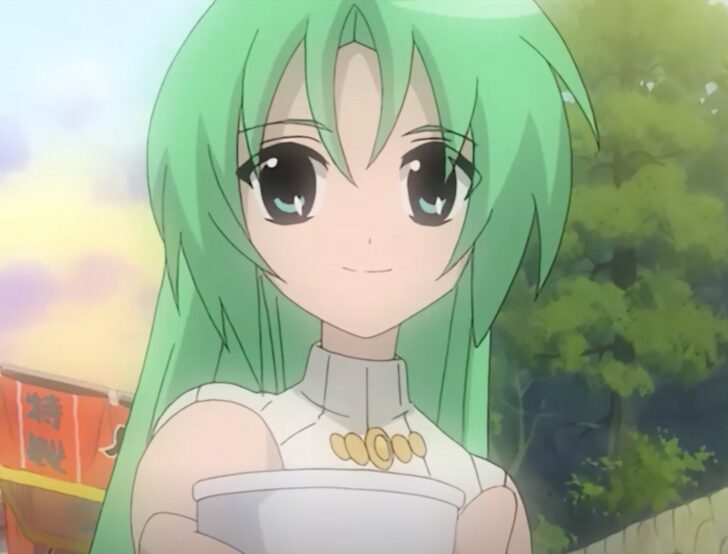
Image by: When They Cry Ep 6 ©Ryukishi 07 ©When they cry production committee
Shion is Mion’s twin sister. Unlike Mion, she is carefree but is not cared for by her parents as much. ‘Shi’(詩) means poem and ‘On’(音) means sound.
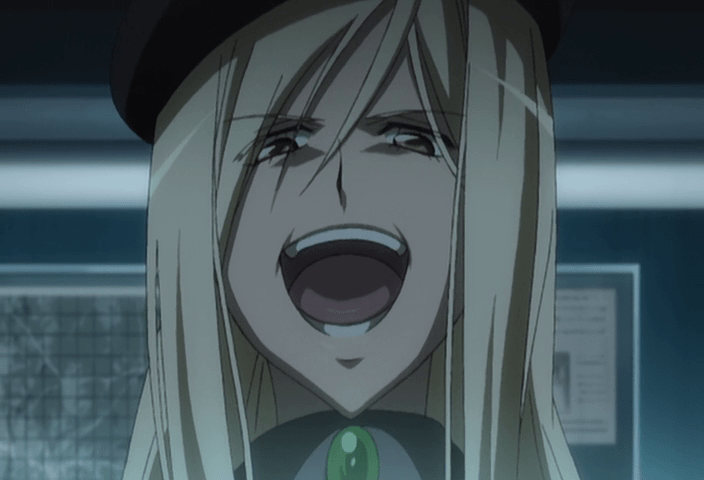
Image by: When They Cry Ep 13 ©Ryukishi 07 ©When they cry production committee
In Japan, it is rude to call a person by their first name so Miyo is respectfully addressed as Takano-San by the villagers. You add ‘San’ at the end of the name to be more polite. ‘Mi’(三) means three and ‘Yo’(四) means four. ‘Taka’(鷹) means hawk and ‘No’ (野) means field.
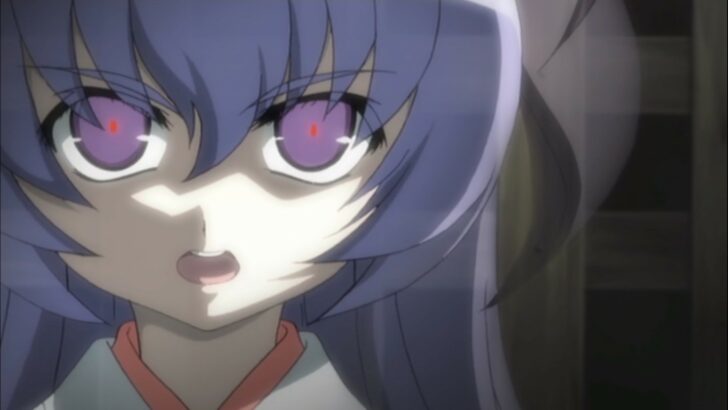
Image by: When They Cry Kai Ep 6 ©Ryukishi 07 ©When they cry production committee
Last but not least the spirit of Rika’s ancestor Hanyu(羽入.) Only Rika can see her so the sounds she makes are mistaken as Oyashiro-Sama’s curse. ‘Ha’(羽) means wings and ‘Nyu’(入) means in.
Here are some useful phrases from When They Cry which will help you along with your Japanese studies!
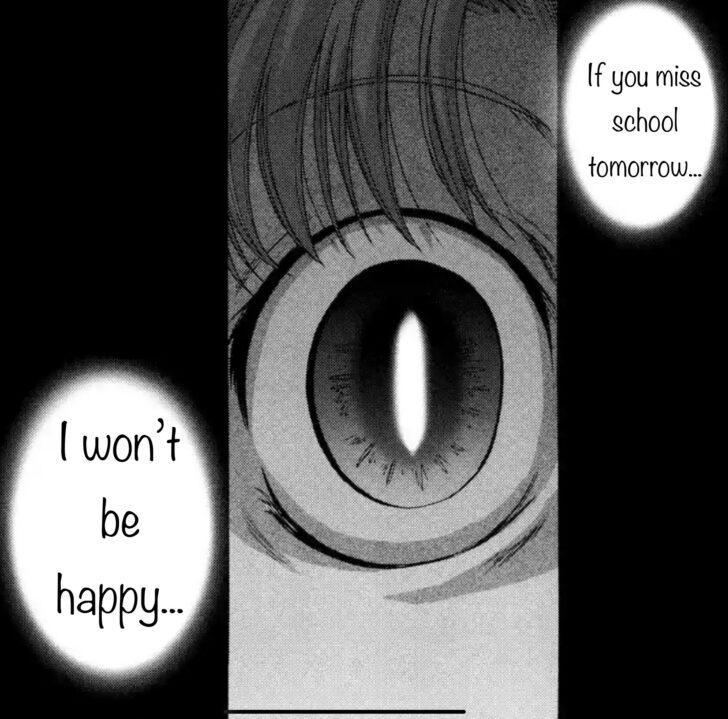
Image by: When They Cry Comic Book 1©Ryukishi 07/07th Expansion ©Karin Suzuragi/SQUARE ENIX
‘Ashita’ means tomorrow and ‘Gakkou’ is school. ‘Yasumi’ means rest or a holiday. ‘Iyadayo’ is used when you want to say you don’t like it or you don’t want to do it.
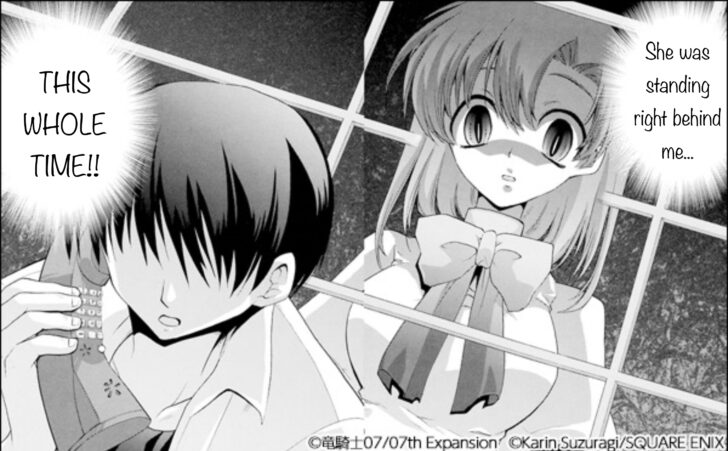
Image by: When They Cry Comic Book 1©Ryukishi 07/07th Expansion ©Karin Suzuragi/SQUARE ENIX
‘Ore’ is a way to call yourself but mostly used by boys. ‘Ushiro’ is behind and ‘Zutto’ means always. ‘Tatsu 立つ’ means stand, when you add ‘ita’ it makes the verb past tense. ’Tatte Ita’ = stood.
 Share
Share Share on your favorite






Or copy the link
Sort by: Most Relevant
Sorts names by how closely they match your search meaning. Names containing more kanji that match your search terms appear higher in the results.
Sort by: Most Kanji Variations
Sorts names by how many different kanji spellings they have. In general, names with more variants tend to be more familiar and widespread in Japan (with some exceptions).
Sort by: Most Viewed
Sorts names by page views on this site. Views reflect global traffic (including Japan), so this does not represent popularity among Japanese people only. A high view count does not necessarily mean the name is famous in Japan.
What is Hiragana?
Hiragana is one of the two Japanese syllabaries. Each character represents a sound (mora), not a meaning. It is used for native words, grammatical particles, verb/adjective endings (okurigana), and to show pronunciation above kanji (furigana). It developed from cursive forms of kanji.
What is Katakana?
Katakana is one of the two Japanese syllabaries. Each character represents a sound (mora), not a meaning. It is mainly used to write foreign words and names, loanwords, onomatopoeia, and for emphasis.
What is a Kanji Idea?
Kanji are Chinese characters used in Japanese writing. Unlike katakana and hiragana, each kanji character carries its own meaning.
When we convert your name into kanji, we select characters whose sounds match the Japanese pronunciation of your name, while also considering the meaning of each character. The result is a unique combination of kanji that both sounds like your name and carries meaningful symbolism.
We refresh the kanji combination each time you visit, so you can discover different options. If you find one you like, save it to your favorites!
What are English Syllables?
A syllable is a unit of pronunciation in English — it’s the beat you hear when you say a word.
Here are a few quick examples:
cat = 1 syllable
ba-by = 2 syllables
beau-ti-ful = 3 syllables
On this site, English Syllables show how a name naturally breaks into sounds when spoken in English. This helps you understand how English speakers naturally say the name and where they pause between sounds.
What are Japanese Morae?
A mora (plural: morae, Japanese: 拍 Haku) is the basic unit of sound in Japanese — think of it as one rhythmic “beat” when speaking.
Here are a few quick examples:
あ (a) = 1 mora
あい (a-i) = 2 morae
きょう (kyo-u) = 2 morae
On this site, Japanese Morae show how many “beats” a name has in Japanese. Most Japanese names have about 2–4 morae, which affects how natural and rhythmic the name sounds to native speakers.
This helps you see how the name fits into the natural rhythm of Japanese speech.
What is English Transcription?
“English transcription” (romanization) is the romanized form of a Japanese name, intended to reproduce its pronunciation as closely as possible. It is also useful for searching names on this site.
Japanese-Style Nicknames
In Japan, nicknames are used to express familiarity and affection. Typical features include:
Shortened forms: Names are often shortened for closeness, e.g., “Yuki” from “Yukiko” or “Taka” from “Takashi”.
Suffixes: Terms like “-chan” (often for girls, also for young children) and “-kun” (often for boys) are used among family and close friends. Among very close adults, “-chan” may still be used. More details
Use & context: Nicknames are informal—common among friends, family, or close colleagues—and are not suitable for formal or professional settings. Their use implies a certain degree of intimacy.
Long vowels: The long vowel mark “chōonpu” (ー) extends the preceding vowel. For example, “あーちゃん” (A-chan) lengthens the “あ” sound.
Households
Sorts surnames by the estimated number of Japanese households that use them. More households generally indicates a more common or well-known surname.
About our last-name data

Success
Migration completed successfully!